Rare Provisions · Field Notes
The Dawn Harvest: Kashmiri Saffron in Pampore
For a few weeks each autumn, the fields around Pampore turn violet almost overnight. The saffron crocus opens in the cool dark and closes again by mid-morning, so the harvest happens at first light — whole families out among the rows, bending to pluck each bloom whole before the day warms and the petals begin to wilt. It is slow, exacting work that no machine has ever managed to take over.
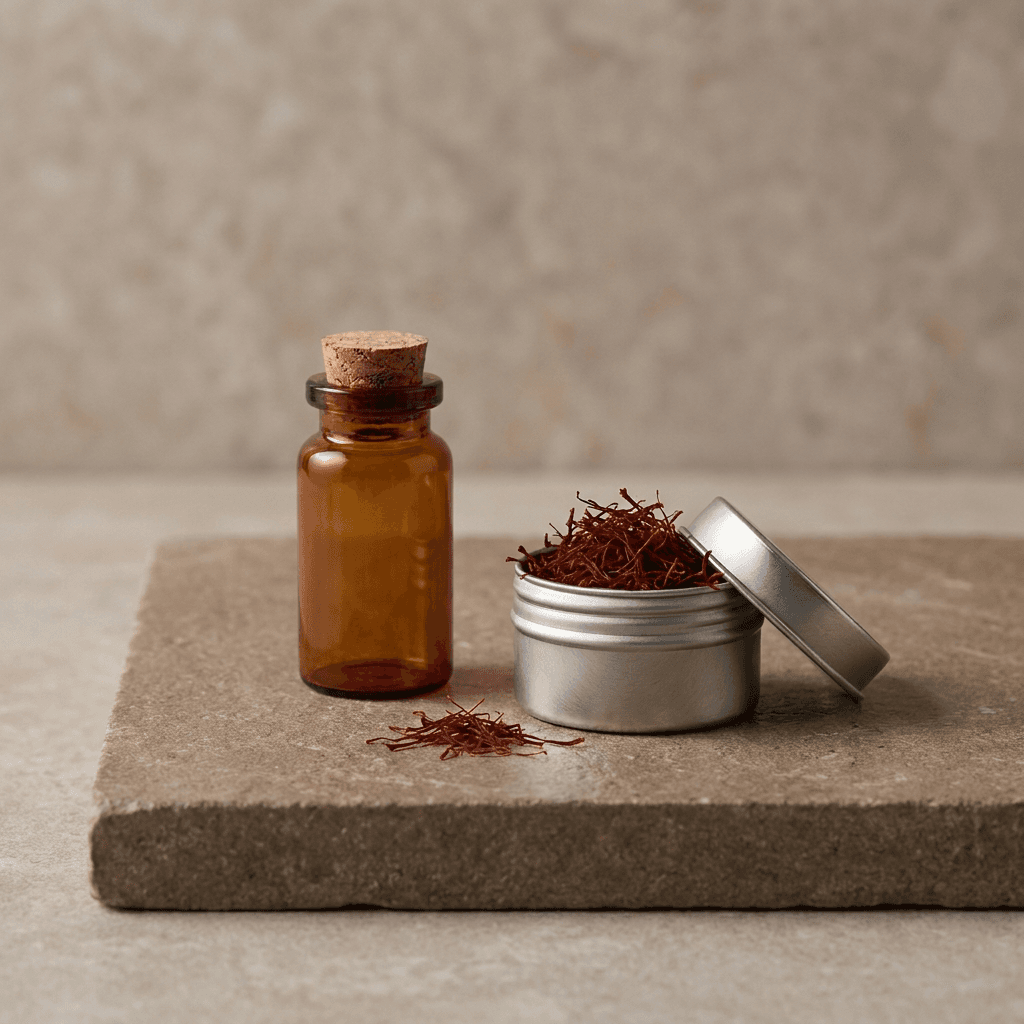
Inside every flower are three crimson threads: the stigmas. Those threads are the saffron. They are separated from the flower by hand the same day, often at a long table that evening, and dried carefully so their color and aroma hold. It takes something on the order of a hundred and fifty thousand flowers to gather a single kilogram of dried threads, which is the whole reason saffron has been counted among the world's most precious harvests for a thousand years.
Not all of a flower's yield is equal, and this is where grading comes in. The very tip of the stigma — the deepest-red, most aromatic portion, with none of the pale style attached — is set aside as the Mongra grade. Pulling only the colored tips is a deliberate choice: it costs more threads and more time, but it gives a purer, more concentrated character in the cup and the pot. When you see 'Mongra' on a tin, you are seeing a grader's decision to sacrifice yield for the top of the crop.
Kashmiri saffron carries a reputation for an unusually deep crimson and a heady, honeyed, faintly leathery aroma — the signature of the Pampore terroir, its altitude and its soil. Good threads are supple rather than brittle, and they release their color slowly and evenly.
To taste it well, don't rush it. Warm a pinch of threads gently and steep them in a little hot water or milk for ten or fifteen minutes before you cook — that bloom draws out both the color and the perfume far better than tossing dry threads into a pot. A very small amount goes a long way; saffron rewards restraint. Used like this, in a rice, a broth, a custard, it does something a spice rarely does: it turns a dish into an occasion.
We source ours by the harvest, from growers on the plateau, and we keep the field notes with every tin — where it came from, when it was picked, and how to give it its proper ceremony at the table.
More field notes